

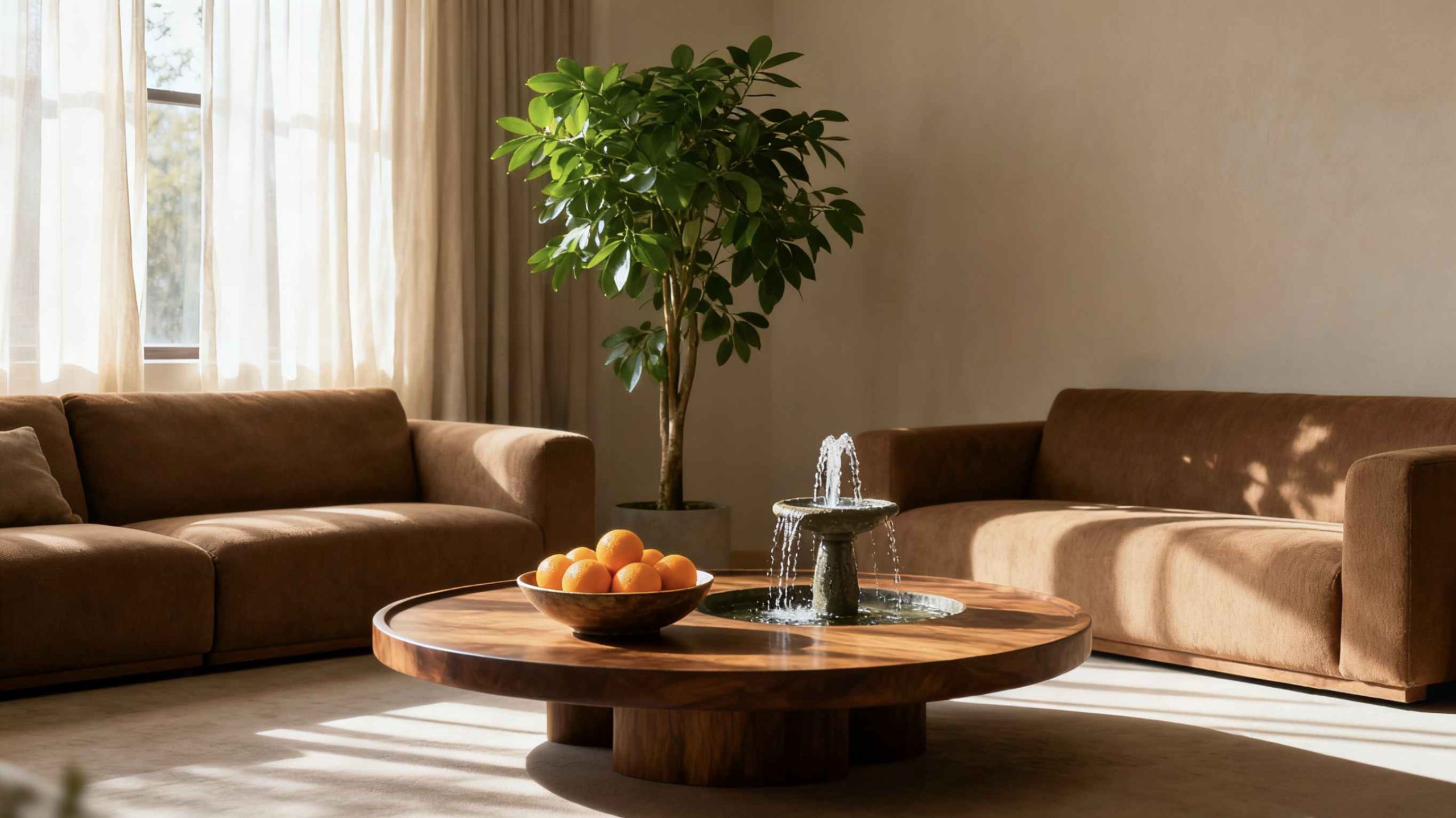
In traditional Chinese home culture, the practice of Feng Shui has always emphasized harmony and stability in the environment. A well-considered layout not only enhances living comfort but also provides a sense of psychological security for the occupants. Today, let’s discuss the often-mentioned “Four Key Backings” layout. These principles apply to your home itself, the sofa, the bed, and the office desk. With some simple adjustments, they can help create a more grounded and harmonious atmosphere in your life.
1. The Backing for Your Home
Ideally, a house should have a supportive feature at its back, such as a taller building or a natural hill. Traditionally, this is believed to enhance a sense of stability and support.
Key Considerations:
- The supporting feature should not be excessively tall, or it may feel oppressive.
- It should not be too close, or it may block energy and light.
- It should not be too far away, or its supportive effect is diminished.
- Its shape should be gentle and sloping, avoiding sharp or aggressive forms.
2. The Backing for Your Sofa
The sofa is best placed against a solid wall. This “backing” is believed to strengthen family cohesion and contribute to stability in career and social relationships.
Quick Tip: Place a bookshelf or a small lamp next to the sofa to add a warm, inviting touch.
Key Considerations:
- Avoid having the sofa backing onto empty space, windows, or doors.
- It is not advisable to place it directly facing a window, as this can undermine the sense of security.
- Try not to position the sofa directly facing or directly backed by a mirror.
- It should also be positioned to avoid directly facing the main entrance or a long corridor.
3. The Backing for Your Bed
The bed, especially the headboard, should be placed against a solid wall. This arrangement aids in improving sleep quality and promotes physical relaxation and emotional stability.
Common layouts to avoid include:
- A headboard not anchored to a wall.
- The bed positioned directly facing a door, window, or air current.
- A beam or heavy pendant light directly above the bed.
- A mirror installed directly facing the bed or at its side.
4. The Backing for Your Office Desk
Your office chair should ideally have a solid wall or a stable partition behind it. This is traditionally thought to help improve focus and makes it easier to gain support from colleagues and superiors.
Try to avoid these situations:
- The seat directly facing or backing a door or window.
- Having a busy aisle or staircase directly behind you.
- Placing items with strong flowing movement, like an aquarium, directly behind the seat.
- Hanging paintings depicting rushing water or other dynamic, chaotic patterns behind you.